

Member Spotlight
Sarah Stanhope - Picnic Ants
(she/her)
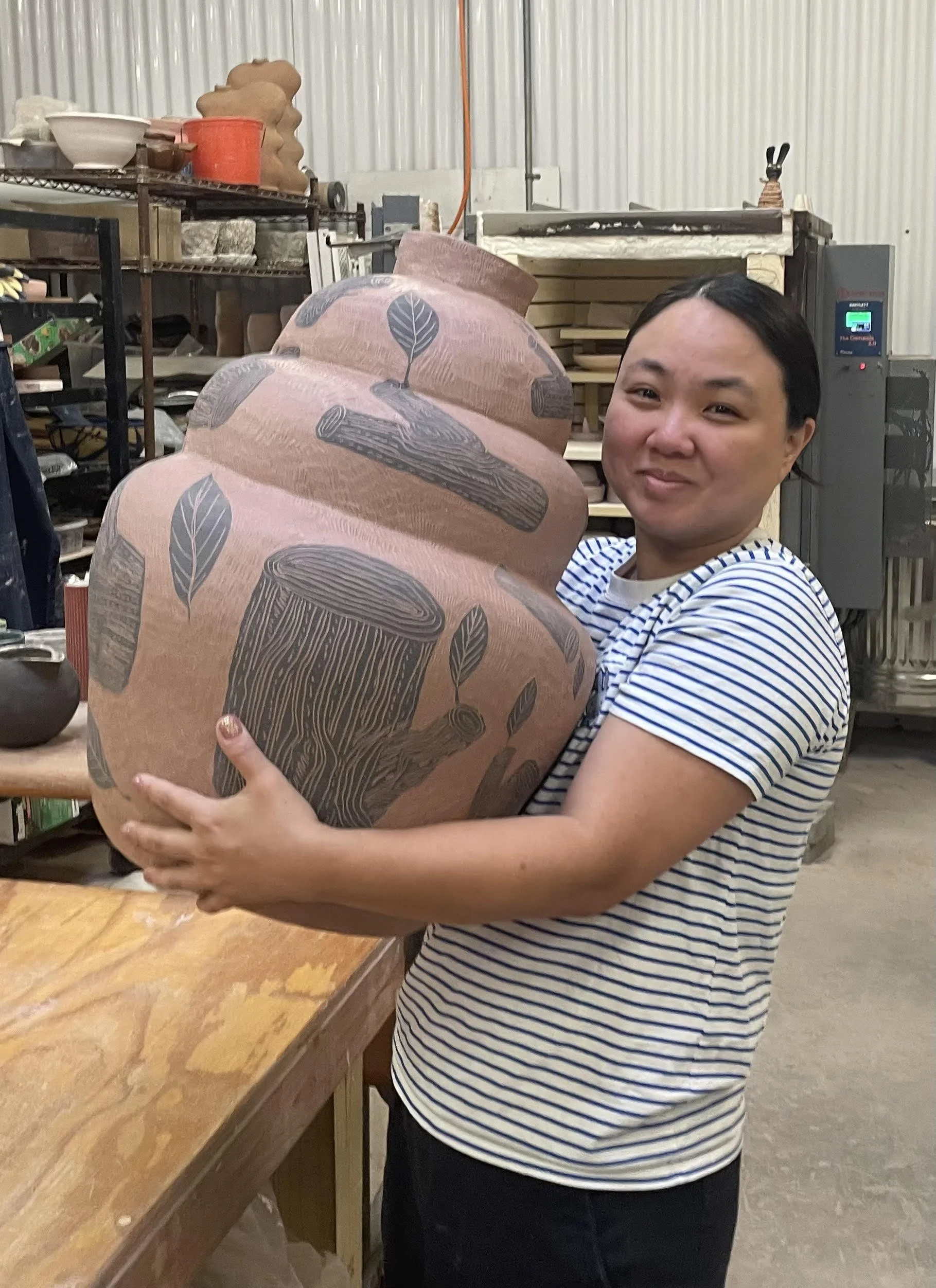
Sarah Stanhope is a ceramics artist and educator based in Texas and the artist behind Picnic Ants Press. With a background in painting and drawing, her work combines illustration and clay through techniques such as sgraffito, carving, and underglaze decoration. Her ceramics often feature expressive characters, narrative imagery, and sculptural forms. Sarah sells her work through local markets and small businesses while also teaching ceramics classes. She draws inspiration from artists including Barry McGee, Clare Rojas, and ceramicists Isai Pineda, Samuel Pineda, and Kim Murton.
Sarah Stanhope
Please tell us a little about your ceramics journey.
I first began taking wheel-throwing classes in high school and later continued studying ceramics in art school. Recently, I’ve been focusing on developing my production pottery skills while also creating larger-scale sculptural work. Working as a studio technician with artist Michelle Heinesen has taught me a great deal about the behind-the-scenes processes of running a ceramics studio, from glaze-making and clay reclaim to designing and teaching classes. Under the guidance of Professor Abbie Edmonson, I’ve also been encouraged to push my sculptural work to a larger scale and continue refining my wheel-throwing skills. My small business, Picnic Ants Press, keeps me engaged in regular production and experimentation, while also connecting me with the ceramics community through markets, collaborations, and local events.
What sparks your creativity? What drives you to work with clay?
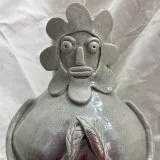
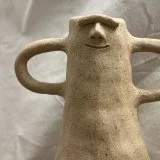
Seeing the work of other artists—regardless of medium—is a constant source of inspiration and motivation for me. Clay vessels give me a surface to combine drawing, illustration, and sculpture in a tactile way. Lately, I’ve been especially interested in creating monochromatic forms with handbuilt and carved features. I’ve enjoyed the direction my character vessels have been taking and hope to continue exploring them on a larger scale.
What clay body do you use?
I enjoy experimenting with a range of clay bodies depending on the project. For sculptural work, I often use Longhorn Red earthenware and Grande cone 10 clay. For wheel-thrown tableware, I frequently use B-Mix in both cone 5 and cone 10, because I like its consistency and the way it showcases glaze colors.
What is your primary forming method?
For larger sculptures, I primarily work with coils. When making tableware, I enjoy throwing on the wheel. I also like incorporating hand building techniques into one-of-a-kind functional pieces because I’m drawn to the organic, wobbly textures they create.
What is your primary firing temperature?
Most of my work is fired to cone 10. I’ve been learning more about reduction firing in the gas kiln and really enjoy the variety of glaze effects and surface changes that emerge through that process.
What is your favorite surface treatment?
Sgraffito is my go-to surface technique because it combines my love of drawing and ceramics. I’ve also been experimenting with mishima as another way to incorporate illustration and line work into my vessels and sculptural surfaces.
What are your favorite tools?
I especially enjoy using Xiem Korean carving tools. The small hooked tip stays sharp and works beautifully for detailed sgraffito drawings. For throwing, I prefer wooden tools. I often use a large Kemper wood rib for shaping bowls, along with a Kemper 406 modeling tool.
What advice would you share with someone just starting out in the field?
The hardest part is often just getting started. For a long time, I delayed returning to clay because I thought I needed the perfect setup. Eventually, I began handbuilding at home and learning through YouTube videos, which helped me build momentum and confidence. Volunteering with Michelle Heinesen at Potclub in EaDo gave me the opportunity to learn new techniques, explore glaze chemistry, and become more comfortable taking creative risks. It’s important to get involved in the ceramics community through organizations like Clay Houston. Community spaces are where you meet other creative people who are passionate about ceramics, exchange knowledge, and discover new opportunities to share and develop your work.
Do you sell your artwork? If so, how/where do you market and sell your work?
Yes, I’ve been fortunate to connect with creative communities in Houston and Austin. I currently vend at Space Montrose, Art League Houston Block Party events and at markets hosted by the Asian American Resource Center in Austin. I share new work and event announcements through Instagram: @picnicantspress.
What’s the best advice you’ve been given by a fellow maker, mentor, or teacher?
The best advice I’ve received is to make work that feels authentic to your own experiences and creative interests rather than focusing on expectations or comparisons. Creating from a genuine place leads to a more sustainable and fulfilling practice.
Whose work excites/inspires you right now?
I’m especially inspired by ceramic artists who incorporate narrative, illustration, and relief into their work. I love the expressive characters and illustrated surfaces created by Kim Murton, who shares many of her process videos on Instagram: @murtonkim